How do I calculate the potential return on investment for a rental property in Old North, Tel Aviv?
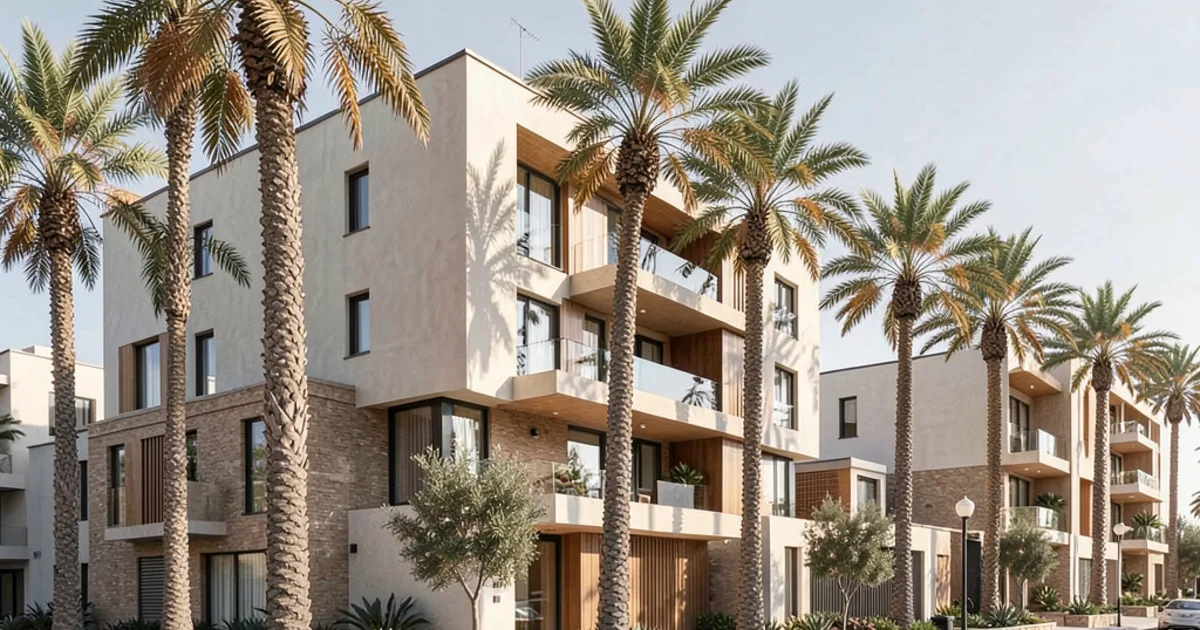
Old North Tel Aviv, with its vibrant atmosphere, proximity to the beach, and desirable residential character, consistently attracts a strong tenant base, making it a compelling area for real estate investment. However, simply buying a property in a sought-after location doesn't automatically guarantee a profitable return. To truly understand the financial viability of such an investment, a meticulous calculation of the potential return on investment (ROI) is essential. This comprehensive guide will walk you through every critical component, from initial acquisition costs to ongoing expenses and potential income streams, empowering you to make informed decisions about your rental property venture in this prime Tel Aviv neighborhood.
Quick answer: To calculate the potential return on investment for a rental property in Tel Aviv, determine the gross yield by dividing the annual gross rental income by the total property cost. For a more accurate net return, subtract all expenses such as maintenance, taxes, and management fees from the gross yield to reflect the actual profit.
- Why Focus on Old North Tel Aviv for Rental Property Investment?
- Decoding Initial Acquisition Costs: The Foundation of Your Investment
- Understanding Operating Expenses: The Ongoing Cost of Ownership
- Projecting Rental Income: Realism is Key
- The Role of Mortgage (Mashkanta) in Your ROI Calculation
- Calculating Cash Flow: The Immediate Financial Health Check
- The ROI Formulas: Cash-on-Cash and Capitalization Rate
- Considering Tax Implications: Mas Shevah and Beyond
- The Long-Term View: Appreciation and Market Dynamics
- Anticipating Challenges and Mitigating Risks
- The AliyahHomes Advantage: Your Trusted Advisor
Why Focus on Old North Tel Aviv for Rental Property Investment?
Old North Tel Aviv stands out as a particularly attractive locale for rental property investment due to a confluence of factors that drive both demand and property value appreciation. Its strategic location, nestled between the bustling city center and the tranquil coastline, offers residents the best of both worlds, appealing to a diverse demographic including young professionals, families, and even retirees seeking an urban yet relaxed lifestyle. The neighborhood is renowned for its well-maintained Bauhaus architecture, tree-lined streets, and a strong sense of community, all contributing to its enduring desirability.
The consistent influx of new residents to Tel Aviv, both local and international, coupled with a persistent housing shortage, underpins a robust rental market in areas like Old North. Properties here typically command premium rental rates, and vacancies tend to be relatively low, especially for well-appointed units. Furthermore, the ongoing urban renewal projects and municipal investments in infrastructure continue to enhance the neighborhood's appeal, suggesting a strong potential for long-term capital appreciation in addition to rental income.
Understanding these foundational market dynamics is the first step before diving into the financial specifics. The inherent strength of the Old North Tel Aviv market provides a solid backdrop for the detailed ROI calculations we will explore. While no investment is without risk, the intrinsic value propositions of this area significantly mitigate some of the uncertainties often associated with real estate speculation.
Investors are often drawn to areas with proven track records of stability and growth, and Old North Tel Aviv consistently delivers on these fronts. Its established reputation as a desirable residential area means that even in fluctuating economic climates, demand for quality housing tends to remain resilient, offering a degree of insulation compared to more volatile emerging markets. This stability is a key consideration for anyone looking to secure a long-term income stream and capital growth.
Decoding Initial Acquisition Costs: The Foundation of Your Investment
The journey to calculating ROI begins with a precise understanding of all the costs incurred to acquire the property. This is far more than just the advertised sale price; it encompasses a range of mandatory government taxes, legal fees, and administrative charges that collectively add a significant percentage to your initial outlay. Overlooking these 'hidden' costs can drastically skew your ROI projections and lead to unpleasant financial surprises down the line.
One of the most substantial costs for non-first-time buyers in Israel is the Mas Rekhisha, or purchase tax. This progressive tax can range from a few percent to a considerable portion of the property value, depending on whether it's your sole property in Israel and your residency status. It's crucial to consult with a local real estate attorney or tax advisor to determine the exact percentage applicable to your specific situation, as this single item can significantly impact your total initial investment.
Beyond purchase tax, you'll encounter legal fees for your attorney (typically a percentage of the property value plus VAT), real estate agent commissions (usually 2% plus VAT from each party), and registration fees with the Tabu land registry. There might also be valuation fees if you're taking out a mortgage, and potentially renovation or upgrade costs if the property requires work before it's ready for rent. Each of these components must be meticulously itemized to establish your true 'all-in' acquisition cost.
It's also prudent to factor in a contingency fund for unforeseen expenses that might arise during the purchase process or immediately after closing. This proactive approach ensures that minor unexpected outlays don't derail your carefully planned budget. A buffer of a few percent of the property value can provide peace of mind and financial flexibility.
- Purchase Tax (Mas Rekhisha): Varies based on residency and number of properties.
- Legal Fees: Attorney's fees (percentage of property value + VAT).
- Real Estate Agent Commission: Typically 2% + VAT for buyer and seller.
- Tabu Registration Fees: For registering ownership with the Land Registry.
- Valuation Fees: If a Mashkanta (mortgage) is secured.
- Renovation/Upgrade Costs: If the property requires work before rental.
- Contingency Fund: For unexpected expenses.
Understanding Operating Expenses: The Ongoing Cost of Ownership
Once the property is acquired, the financial responsibilities shift to ongoing operating expenses, which are critical to subtract from your gross rental income to arrive at a true net income figure. These expenses are not static; they can fluctuate based on municipal policies, building management decisions, and the age and condition of the property. Accurate estimation of these costs is paramount for a realistic ROI calculation.
A primary ongoing expense is Arnona, the municipal property tax, which is paid quarterly or bi-monthly. The amount depends on the property's size, location within the city, and designated use. Another significant cost is 'Vaad Bayit,' the building maintenance fee, which covers communal services like cleaning, elevator maintenance, and garden upkeep. This fee can vary widely depending on the building's amenities and the efficiency of its management committee.
Insurance is another non-negotiable expense. You'll need building insurance to protect the structural integrity and common areas, and potentially landlord's insurance to cover liability and loss of rent. Furthermore, regular maintenance and repair costs, even for a well-maintained property, should be budgeted annually. This can include anything from plumbing repairs to appliance replacements or periodic painting. It's often wise to allocate a percentage of the annual rent towards a maintenance reserve.
Finally, investors should consider property management fees if they opt to outsource the day-to-day running of the rental. These fees typically range from a percentage of the monthly rent to a fixed monthly charge. While an additional expense, a good property manager can save time, reduce stress, and potentially improve tenant retention, which can indirectly boost your overall ROI. Don't forget potential accountant fees for tax filings related to rental income.
- Arnona (Municipal Property Tax): Quarterly or bi-monthly, based on property size and location.
- Vaad Bayit (Building Maintenance Fee): Monthly, covers communal services and upkeep.
- Property Insurance: Building insurance and landlord's liability insurance.
- Maintenance & Repairs: Annual budget for routine and unexpected fixes.
- Property Management Fees: If outsourcing tenant relations and upkeep.
- Accountant Fees: For filing rental income and expense reports.
Projecting Rental Income: Realism is Key
Accurately projecting your potential rental income is just as crucial as understanding your costs. While it's tempting to aim for the highest possible rent, a realistic assessment based on market comparables and the property's specific attributes will provide a more reliable ROI forecast. Overestimating rental income is a common pitfall that can lead to disappointment and financial strain.
Begin by researching similar properties in Old North Tel Aviv that are currently being rented. Look at properties of comparable size, number of rooms, condition, and amenities. Online real estate portals, local agents, and property management companies can provide valuable data points. Pay attention to how quickly properties are rented and any concessions landlords are making, as these indicate market demand and pricing elasticity.
Consider the unique selling propositions of your specific property. Does it have a balcony with a sea view? Is it newly renovated? Does it come with parking? These features can command a premium. Conversely, if it's an older unit requiring updates or lacks certain popular amenities, your rental price might need to be adjusted accordingly. Be objective in your assessment; a tenant will be.
Finally, factor in potential vacancy periods. While Old North Tel Aviv has a strong rental market, it's unrealistic to expect 100% occupancy year-round, especially when transitioning between tenants. Budgeting for a reasonable vacancy rate, perhaps a few weeks to a month annually, provides a more conservative and robust financial projection. This also accounts for the time needed for minor touch-ups or cleaning between tenants.
The Role of Mortgage (Mashkanta) in Your ROI Calculation
For many investors, a Mashkanta, or mortgage, is an integral part of financing a property purchase, and its terms significantly influence your overall ROI. While leveraging borrowed capital can amplify returns (the 'leverage effect'), it also introduces interest payments and the responsibility of debt servicing, which must be meticulously factored into your calculations.
The interest rate on your mortgage, whether fixed, variable, or a combination, will be a major determinant of your monthly expenses. Even small differences in interest rates can translate into substantial variances in total interest paid over the life of the loan. It's advisable to shop around among different Israeli banks and mortgage brokers to secure the most favorable terms possible, considering both the interest rate and associated fees.
Beyond the interest, remember that a portion of your monthly mortgage payment goes towards the principal. While this reduces your outstanding debt and increases your equity, it's not a direct 'expense' in the same way interest is. For ROI calculations, focus on the cash flow impact of the full monthly payment. If the rental income covers the mortgage payment and other operating expenses, you have positive cash flow; if not, you have negative cash flow, which requires careful consideration.
Understanding your loan-to-value (LTV) ratio is also crucial. A higher down payment means a smaller mortgage and consequently lower monthly payments, potentially leading to stronger cash flow. However, it also means more of your personal capital is tied up. The optimal balance between leveraging a mortgage and committing personal funds is a strategic decision that impacts both risk and potential return, and should align with your personal financial goals and risk tolerance.
Calculating Cash Flow: The Immediate Financial Health Check
Cash flow is perhaps the most immediate indicator of a rental property's financial health. It represents the net amount of money flowing in and out of your investment on a regular basis, typically monthly or annually. Positive cash flow means the property is generating more income than it costs to operate, while negative cash flow indicates a deficit that must be covered by other funds.
To calculate monthly cash flow, start with your gross monthly rental income. From this, subtract all monthly operating expenses, including Arnona (prorated monthly), Vaad Bayit, insurance premiums (prorated), an allocation for maintenance, and any property management fees. Crucially, also subtract your full monthly mortgage payment (principal and interest).
The resulting figure is your net monthly cash flow. A consistently positive cash flow is generally desirable, as it provides a buffer against unexpected expenses and contributes directly to your personal income. Even a modest positive cash flow can be a strong indicator of a healthy investment, especially when combined with potential long-term capital appreciation.
It's important to differentiate cash flow from overall profitability. A property might have negative cash flow but still be a good investment if it's appreciating significantly in value or if tax benefits outweigh the monthly deficit. However, sustained negative cash flow requires a robust personal financial reserve, as it means you are continuously injecting money into the property, which can strain liquidity. Always run a worst-case scenario cash flow analysis to understand your exposure.
The ROI Formulas: Cash-on-Cash and Capitalization Rate
When evaluating rental properties, two primary ROI metrics are commonly used: Cash-on-Cash Return and Capitalization Rate (Cap Rate). Each offers a distinct perspective on the profitability of your investment, and understanding both provides a more comprehensive financial picture.
Cash-on-Cash Return is particularly useful for investors who finance their purchases with a mortgage, as it measures the annual pre-tax cash flow generated by the property against the actual cash invested. The formula is: (Annual Pre-Tax Cash Flow / Total Cash Invested) x 100%. 'Total Cash Invested' includes your down payment, closing costs (purchase tax, legal fees, agent commission), and any initial renovation expenses. This metric directly shows how much your out-of-pocket cash is earning.
The Capitalization Rate, or Cap Rate, on the other hand, is generally used for evaluating properties purchased entirely with cash or to compare the relative value of different income-generating properties regardless of their financing structure. It focuses purely on the property's income-generating ability relative to its purchase price. The formula is: (Net Operating Income / Property Purchase Price) x 100%. Net Operating Income (NOI) is defined as gross rental income minus all operating expenses, but *before* mortgage payments and income taxes.
While both are valuable, they serve different purposes. Cash-on-Cash Return tells you about the immediate return on your personal cash outlay, which is highly relevant for leveraged investments. Cap Rate gives you a sense of the unleveraged yield the property is generating, useful for comparing investment opportunities or understanding market valuations. A healthy investment strategy often involves aiming for a property that performs well on both metrics, aligning with your personal financial objectives.
Considering Tax Implications: Mas Shevah and Beyond
Tax considerations are a critical, yet often underestimated, component of real estate investment in Israel, profoundly impacting your net returns. Ignoring these can lead to significant erosion of your profits, so it's essential to factor them into your long-term ROI projections from the outset. Israeli tax laws are complex and subject to change, making professional advice indispensable.
One of the most significant taxes for property sellers is Mas Shevah, or capital gains tax. This tax is levied on the profit made from selling a property (the difference between the sale price and the adjusted acquisition cost, which includes certain expenses like purchase tax and renovation costs). The rate can be substantial, and there are specific exemptions and calculations that apply, particularly for primary residences or properties held for certain periods. Planning for this eventual cost is vital, even if the sale is years away.
Beyond capital gains, rental income itself is subject to income tax in Israel. There are different taxation routes for rental income, including a flat tax rate (currently around 10% on gross income for residential rentals, with certain conditions), or opting to be taxed according to marginal tax brackets, allowing for expense deductions. The optimal route depends on individual circumstances, other income, and deductible expenses. An Israeli tax advisor can help you navigate these options to minimize your tax burden.
Furthermore, be aware of potential betterment levies (Hetal Hashbacha) imposed by local municipalities when planning permits are granted that increase the value of your property, such as rights to add floors or expand. While not an annual tax, this can be a significant cost upon sale or when exercising those rights. A comprehensive tax strategy, developed with a qualified Israeli accountant, is an investment that pays dividends by optimizing your after-tax returns.
The Long-Term View: Appreciation and Market Dynamics
While cash flow and immediate ROI metrics are crucial, a complete assessment of a rental property in Old North Tel Aviv must incorporate the long-term potential for capital appreciation. Real estate in prime Tel Aviv locations has historically demonstrated strong value growth, driven by consistent demand, limited supply, and the city's economic vitality. This appreciation can significantly boost your overall return, even if annual cash flow is modest.
However, appreciation is not guaranteed and can be influenced by broader economic cycles, interest rate changes, and specific local developments. Researching historical property value trends in Old North Tel Aviv can provide insights, but past performance is not a definitive indicator of future results. Consider factors like planned infrastructure projects, further urban renewal, and demographic shifts that could impact property values over your intended holding period.
The 'uniqueness' of Old North Tel Aviv, with its Bauhaus heritage and protected building facades, contributes to its long-term allure and value stability. Properties in such areas often retain their value better during downturns and appreciate more robustly during upswings. This intrinsic appeal is a powerful, albeit less quantifiable, aspect of your investment.
Ultimately, a holistic ROI calculation should consider both the tangible annual returns (cash flow, tax benefits) and the potential for long-term capital growth. For many investors in Tel Aviv, the capital appreciation component often outweighs the annual rental yield, making it a strategic long-term wealth-building asset. Regular market analysis and staying informed about local developments are key to monitoring this aspect of your investment.
Anticipating Challenges and Mitigating Risks
No investment is entirely risk-free, and rental property ownership in Old North Tel Aviv, while generally robust, comes with its own set of potential challenges that savvy investors must anticipate and plan for. Proactive risk mitigation is crucial for protecting your investment and ensuring your ROI projections remain achievable.
Tenant-related issues are a common concern. These can range from late rent payments and property damage to difficulties with eviction, should that become necessary. Thorough tenant screening, including background checks and references, is paramount. Having a clear, legally sound rental agreement (which in Israel is typically in Hebrew and requires careful review) is also essential. Engaging a reputable property manager can significantly reduce the burden and risk associated with tenant relations.
Market fluctuations represent another risk. While Tel Aviv's market has been strong, economic downturns, changes in interest rates, or shifts in demand could impact rental rates or property values. Diversifying your investment portfolio and maintaining a healthy financial reserve can help weather such storms. Staying informed about economic forecasts and real estate market trends is also beneficial.
Finally, unexpected maintenance and repair costs can quickly erode profits. Older buildings, while charming, may require more frequent or costly repairs. Budgeting realistically for these expenses, and having a contingency fund, is vital. Legal and regulatory changes, such as new taxation policies or tenant protection laws, could also impact your investment. Staying abreast of Israeli real estate legislation is important, often best achieved through professional legal counsel.
Even language barriers can pose a challenge for international investors. Engaging local professionals, lawyers, accountants, property managers, and real estate agents, who are fluent in both English and Hebrew, and deeply familiar with Israeli laws and customs, can help navigate these complexities effectively. Resources like an 'ulpan' (Hebrew language school) can also benefit foreign investors seeking deeper integration.
The AliyahHomes Advantage: Your Trusted Advisor
Navigating the intricacies of the Israeli real estate market, especially in a prime location like Old North Tel Aviv, can be complex, particularly for investors new to the country or those managing their assets from abroad. This is where a trusted partner like AliyahHomes becomes invaluable, offering expert guidance and a comprehensive suite of services designed to simplify your investment journey.
AliyahHomes specializes in connecting international investors with premium real estate opportunities across Israel, providing end-to-end support from initial property identification to ongoing property management. Our team comprises seasoned real estate professionals, legal experts, and financial advisors who possess an in-depth understanding of the local market, regulations, and investment strategies that work best in Israel.
We assist with every stage of the process: conducting thorough market analyses, identifying properties that align with your investment goals, facilitating due diligence (including Tabu checks and municipality records), negotiating terms, and guiding you through the legal and financial aspects of the purchase, including Mashkanta applications and tax considerations. Our goal is to ensure a smooth, transparent, and successful acquisition.
Beyond the purchase, AliyahHomes offers robust property management services, handling tenant screening, rent collection, maintenance coordination, and ensuring compliance with all local laws. This allows you to enjoy the benefits of your investment without the day-to-day operational burdens. Our expertise ensures that your property is well-maintained, your tenants are satisfied, and your rental income is maximized, ultimately bolstering your long-term ROI in Old North Tel Aviv and beyond.
FAQ
What is the average purchase tax (Mas Rekhisha) rate in Israel for a second property?
The purchase tax for a second property in Israel is progressive and can range significantly, typically starting at a few percent and going up to a higher percentage for more expensive properties. It's crucial to consult a tax professional for an exact calculation based on the current regulations and property value.
Are there any specific legal requirements for rental agreements in Old North Tel Aviv?
Yes, rental agreements in Israel must comply with specific legal standards, often including clauses regarding rent increases, maintenance responsibilities, and termination notices. It is highly recommended to have a local Israeli attorney draft or review any rental agreement to ensure full compliance with the law and protect your interests.
How is 'Vaad Bayit' (building maintenance fee) determined in Tel Aviv apartment buildings?
Vaad Bayit fees are typically determined by the building's residents' committee or a professional management company hired by the residents. The fees cover shared expenses like cleaning, gardening, elevator maintenance, and general upkeep of common areas, and vary based on the building's amenities and size.
Can I get a mortgage (Mashkanta) in Israel as a non-resident investor?
Yes, non-resident investors can generally obtain a Mashkanta (mortgage) in Israel, though the terms, such as the maximum loan-to-value ratio and interest rates, may differ from those offered to Israeli residents. It's advisable to engage with an experienced Israeli mortgage broker to explore your options and navigate the application process.
Get your personalised shortlist
Listings and up-to-date info, straight to your inbox, free, no obligation.
Get my shortlist →