Highest rental yield neighborhoods in Tel Aviv for property investors
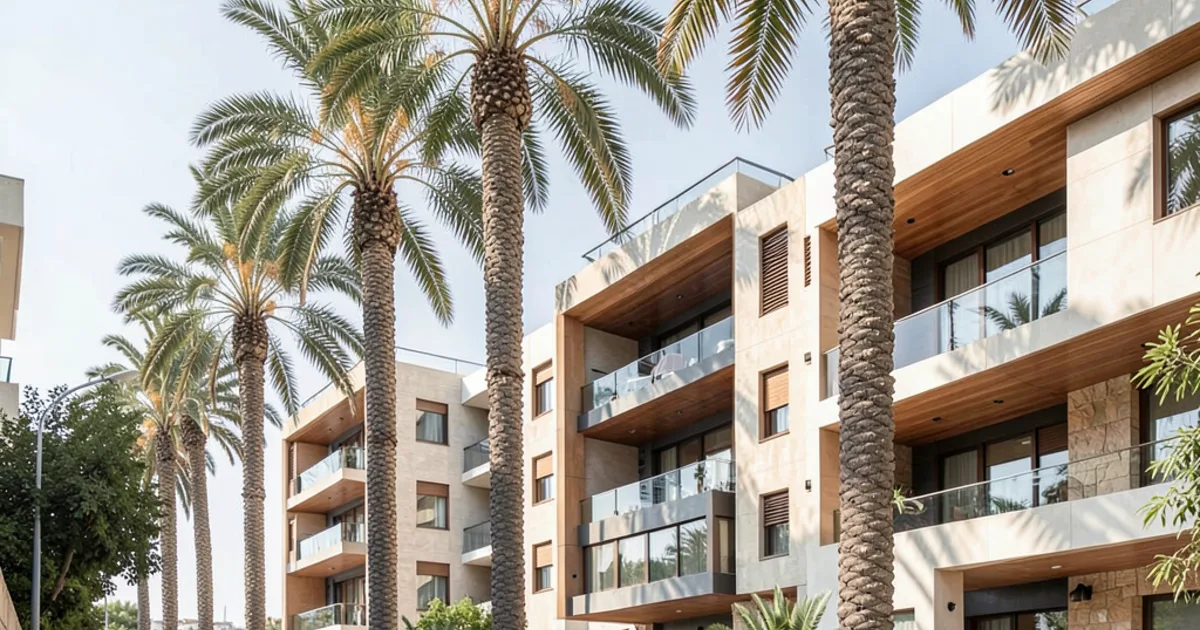
Investing in Tel Aviv offers a unique blend of capital appreciation potential and steady rental demand, driven by a robust tech sector and international interest. However, achieving the highest rental yield requires a sophisticated understanding of the local market nuances that distinguish a simple property purchase from a high-performing asset. This guide explores the strategic landscape of the Tel Aviv market to help investors identify opportunities that optimize cash flow and long-term value.
Quick answer: Israeli rental yields vary significantly by location, typically ranging from 2% to 4% in major metropolitan areas like Tel Aviv. Investors often seek higher returns in peripheral cities or specific residential neighborhoods where property prices are lower relative to local rental demand.
- Understanding Rental Yields in the Tel Aviv Real Estate Market
- Distinguishing Between Gross and Net Yields in the Israeli Context
- Neighborhoods Optimized for High-Yield Short-Term Rentals
- Identifying Long-Term Rental Growth in Emerging Districts
- The Impact of Mas Rekhisha and Mas Shevah on ROI
- Managing Operational Expenses: Arnona and Maintenance
- Navigating Mashkanta and Financing Your Israeli Investment
- Essential Due Diligence: The Tabu and Legal Verification
- Balancing Capital Appreciation with Monthly Cash Flow
- The Potential of Pinui Binui in Increasing Property Value
- The Role of the Binding Memorandum in Securing Your Asset
- Strategic Portfolio Management for the Israeli Market
Understanding Rental Yields in the Tel Aviv Real Estate Market
Tel Aviv remains the primary engine of the Israeli economy, attracting a constant influx of high-earning professionals and international talent. This concentrated demand creates a unique environment where property values are consistently high, but so is the appetite for quality housing. Investors often enter the market looking for stability, but finding the highest rental yield requires a nuanced approach to neighborhood selection. It is not merely about finding the highest rent, but about finding the optimal balance between entry price and rental income.
The local market is characterized by a high barrier to entry, which often pushes investors to look beyond the most expensive central districts. While the city center offers prestige, the yield potential often shifts toward the periphery or toward specific urban renewal zones. Understanding the local economic drivers, such as the expansion of the tech sector and the density of the central business district, is crucial. These drivers dictate which neighborhoods will maintain high occupancy rates and consistent rent increases.
Investors must also consider the seasonality and the demographic shifts within the city. For instance, areas near major universities or business hubs cater to different tenant profiles than the coastal luxury districts. A successful strategy involves matching the property type to the specific needs of the local demographic. By doing so, an investor can mitigate vacancy risks and ensure a steady stream of income that supports their long-term financial goals.
- High demand from the high-tech sector
- Strong influx of international professionals
- Concentrated urban density driving rental needs
Distinguishing Between Gross and Net Yields in the Israeli Context
When evaluating potential investments, many novice investors make the mistake of only calculating the gross rental yield. Gross yield is a simple calculation of the annual rental income divided by the total purchase price of the property. While this provides a quick snapshot, it fails to account for the significant costs associated with owning real estate in Israel. Relying solely on gross figures can lead to a skewed perception of profitability and unexpected cash flow shortages.
To understand the true performance of an asset, one must calculate the net rental yield. This calculation subtracts all operational and acquisition costs from the annual rent before dividing by the purchase price. In Tel Aviv, these costs can be substantial and must be factored into your initial projections. Neglecting these variables can turn a seemingly profitable investment into a monthly deficit.
A comprehensive net yield calculation should include several key components specific to the Israeli market. Investors should account for municipal taxes, building maintenance fees, and the amortized cost of acquisition taxes. By focusing on the net figure, you gain a realistic view of the actual cash returning to your pocket. This disciplined approach is essential for building a sustainable and profitable real estate portfolio.
- Gross Yield = Annual Rent / Property Price
- Net Yield = (Annual Rent - Operating Expenses) / Property Price
- Always prioritize net yield for accurate financial planning
Neighborhoods Optimized for High-Yield Short-Term Rentals
For investors seeking higher turnover and potentially higher daily rates, short-term rental strategies in specific Tel Aviv neighborhoods can be lucrative. Areas located near the coastline or in historic, trendy districts often command a premium for short-term stays. These neighborhoods attract tourists, business travelers, and expats who prioritize lifestyle and proximity to amenities. However, this strategy requires a much higher level of active management compared to traditional long-term leasing.
Neighborhoods characterized by high walkability and proximity to cultural hubs are the primary targets for this model. These areas often feature unique architectural styles, such as older, renovated buildings that appeal to the aesthetic preferences of short-term renters. While the rental income per night can be significantly higher than monthly rates, the operational costs also increase. You must account for higher cleaning frequencies, utility usage, and the necessity of professional property management.
The risk profile of short-term rentals is also higher due to the volatility of tourism and travel trends. Vacancy periods can be more frequent and unpredictable than in the long-term residential market. Consequently, the yield in these areas is often a 'high-risk, high-reward' scenario. Investors should ensure they have sufficient liquidity to cover periods of lower occupancy and that they are prepared for the intensive administrative demands of this model.
- Coastal districts with high tourist demand
- Historic neighborhoods with unique character
- Areas with high walkability and proximity to nightlife
Identifying Long-Term Rental Growth in Emerging Districts
While central Tel Aviv offers prestige, some of the most significant yield opportunities are found in emerging districts that are undergoing transformation. These areas often feature lower entry prices, which naturally leads to a higher potential rental yield relative to the capital invested. As these neighborhoods gentrify and improve their infrastructure, both the rental income and the underlying property value tend to rise. This dual benefit of cash flow and appreciation is the hallmark of a sophisticated investment strategy.
Investors should look for neighborhoods that are benefiting from significant municipal investment or proximity to new transit links. The expansion of public transportation, such as new light rail lines, can drastically change the desirability of a district. Areas that were once considered peripheral are becoming highly sought-after as connectivity to the city center improves. Identifying these trends early allows an investor to enter the market before prices fully reflect the new reality.
Long-term rental strategies in these emerging areas tend to be more stable and less management-intensive than short-term models. Tenants in these districts are often young professionals or small families looking for long-term stability in a growing urban environment. This leads to lower turnover rates and more predictable monthly income. By focusing on these 'growth' neighborhoods, investors can capture the benefits of early-stage appreciation while maintaining a healthy rental yield.
- Proximity to new public transportation infrastructure
- Areas benefiting from municipal urban renewal projects
- Neighborhoods showing signs of early-stage gentrification
The Impact of Mas Rekhisha and Mas Shevah on ROI
Taxation is a critical component of the Israeli real estate landscape and can significantly impact your total return on investment. The first major tax an investor encounters is Mas Rekhisha, or purchase tax. This tax is applied at the time of acquisition and varies depending on whether the buyer is a resident, a non-resident, or an investor. For many, Mas Rekhisha represents a significant upfront capital requirement that must be factored into the total cost of the property.
The second major tax to consider is Mas Shevah, which is the capital gains tax applied upon the sale of the property. This tax is calculated on the profit made between the purchase price and the sale price. Understanding how Mas Shevah is calculated is vital for long-term planning, as it dictates your net profit upon exiting the investment. It is important to realize that even a high-yielding property can see its total ROI diminished if the tax burden is not carefully managed.
Effective tax planning involves understanding the nuances of these regulations and how they interact with your specific investment goals. For example, certain types of property or specific holding periods may influence your tax liability. While you should always consult with a professional, being aware of these costs allows you to model more accurate exit scenarios. Ignoring the impact of Mas Rekhisha and Mas Shevah is one of the most common errors made by international investors.
- Mas Rekhisha: Upfront purchase tax impacting initial capital
- Mas Shevah: Capital gains tax impacting exit profitability
- Tax implications vary based on residency and property type
Managing Operational Expenses: Arnona and Maintenance
To maintain an accurate understanding of your net yield, you must account for the recurring operational expenses of the property. One of the most consistent costs in Israel is Arnona, the municipal property tax. Arnona is calculated based on the size of the property and its usage, and it is typically paid to the local municipality. Unlike some other countries, Arnona is a significant recurring expense that must be factored into your monthly cash flow projections.
Beyond municipal taxes, property maintenance and 'Va'ad Bayit' (building management fees) are essential considerations. In many Tel Aviv apartment buildings, the Va'ad Bayit covers the upkeep of common areas, such as elevators, cleaning, and lighting. In older buildings, these fees can fluctuate based on the level of maintenance required. If you are investing in an older structure, it is wise to investigate the history of the building's maintenance to avoid unexpected levies.
Effective management of these expenses is key to protecting your rental yield. This involves ensuring that the property is well-maintained to prevent costly emergency repairs and keeping a close eye on utility costs. For investors who are not local, hiring a reputable property management company is often a necessity. While this adds a line item to your expenses, it ensures that the property is cared for and that the tenant's needs are met, ultimately protecting your asset.
- Arnona: Essential municipal tax based on property size
- Va'ad Bayit: Building management fees for common areas
- Maintenance: Necessary costs for preserving asset value
Navigating Mashkanta and Financing Your Israeli Investment
Financing is often the lever that allows investors to scale their portfolios, but navigating the Israeli mortgage market, known as Mashkanta, requires careful planning. The terms of a Mashkanta in Israel can vary significantly based on the interest rate type, the loan-to-value (LTV) ratio, and the duration of the loan. Understanding these variables is essential for calculating how much of your rental income will actually be net profit after debt service.
The LTV ratio is a critical factor that determines how much equity you must provide upfront. For non-residents, the requirements for a Mashkanta may be more stringent than for local residents, often requiring a larger down payment. Additionally, the type of interest rate, fixed, variable, or floating, can have a profound impact on your monthly payments and your long-term risk profile. In a fluctuating interest rate environment, choosing the right structure is vital for maintaining stable cash flow.
When modeling your investment, you must consider how the interest on your Mashkanta interacts with your rental income. A high-yield property might still produce low net cash flow if the mortgage payments are too high relative to the rent. The goal is to find an optimal balance where the debt service supports the acquisition without eroding the monthly yield. Always perform sensitivity analysis to see how changes in interest rates might affect your ability to service the debt.
- Mashkanta: The Israeli mortgage system
- LTV Ratio: Determining the required equity injection
- Interest Rate Risk: Balancing fixed vs. floating rates
Essential Due Diligence: The Tabu and Legal Verification
In the Israeli real estate market, thorough due diligence is the only way to ensure the security of your investment. The most fundamental step in this process is verifying the property's status in the Tabu, which is the official land registry. The Tabu provides the definitive record of ownership, liens, and any legal encumbrances placed on the property. Without a clear and verified Tabu record, you risk acquiring an asset with significant legal complications.
Beyond the Tabu, it is crucial to investigate any existing 'Hazakot' or rights associated with the property. This includes checking for any easements, rights of way, or shared usage agreements that could affect your ability to use or renovate the property. A property that appears perfect on the surface may have underlying legal restrictions that limit its future potential or its ability to generate certain types of rental income. This level of scrutiny is non-negotiable for professional investors.
The legal verification process should always be conducted by a qualified local attorney. A professional will not only check the Tabu but will also review the building's permits, ensure all construction is legal, and verify that there are no outstanding municipal issues. This step is an essential safeguard against the hidden risks that can arise in complex urban environments like Tel Aviv. Investing in proper legal due diligence is a small price to pay for the security of your capital.
- Tabu: The official land registry for ownership verification
- Encumbrances: Checking for liens or legal restrictions
- Permits: Ensuring all construction is legally compliant
Balancing Capital Appreciation with Monthly Cash Flow
A common dilemma for investors in Tel Aviv is choosing between properties that offer high monthly cash flow and those that offer high capital appreciation. High-yield properties, often found in emerging or less central districts, tend to provide more immediate income but may have slower growth in value. Conversely, properties in prime central locations often offer lower rental yields but have a history of significant price appreciation over time.
Successful investors often view these two factors as two sides of the same coin, aiming for a 'Total Return' strategy. The total return is the sum of the annual rental yield and the annual rate of capital appreciation. By calculating this combined figure, you can more accurately compare different investment opportunities. A property with a 3% yield and 5% appreciation may be a superior investment to one with a 5% yield and 1% appreciation.
Diversifying your portfolio across different property types and locations can help mitigate the risks associated with this balance. Some investors choose to focus on cash-flow-heavy assets to provide immediate liquidity, while others prioritize appreciation to build long-term wealth. Understanding your own financial objectives, whether you need immediate income or long-term growth, is the first step in deciding which side of the equation to prioritize.
- Cash Flow: Immediate monthly income from rent
- Appreciation: Long-term increase in property value
- Total Return: The sum of yield and appreciation
The Potential of Pinui Binui in Increasing Property Value
One of the most powerful drivers of property value in Tel Aviv is the 'Pinui Binui' process, which refers to urban renewal projects involving demolition and reconstruction. As many parts of the city consist of older, low-density buildings, the municipality encourages developers to replace them with much larger, modern residential towers. For an investor, owning property in a zone designated for Pinui Binui can lead to extraordinary capital gains.
Participating in a Pinui Binui project typically involves the current owner receiving a significantly larger or more modern apartment in the new building in exchange for their current unit. While this process can take several years and involves various legal and bureaucratic complexities, the eventual increase in property value can be substantial. This is a long-term play that requires patience and a high tolerance for uncertainty.
However, investors must approach Pinui Binui with caution. Not every old building is slated for renewal, and the process can be delayed by legal disputes or changes in municipal planning. It is essential to research the specific urban renewal plans for a neighborhood and consult with experts to understand the likelihood and timeline of such projects. When executed correctly, Pinui Binui is one of the most effective ways to multiply the value of a Tel Aviv real estate asset.
- Pinui Binui: Urban renewal through demolition and reconstruction
- Value Multiplication: Potential for massive capital gains
- Long-term Strategy: Requires patience and careful research
The Role of the Binding Memorandum in Securing Your Asset
Once you have identified a property and negotiated the terms, the legal process moves to the creation of the binding memorandum, or 'Heskem Mahoz'. This document is the formal contract that outlines all the terms and conditions of the sale. In Israel, the memorandum is a critical legal instrument that binds both the buyer and the seller to the agreed-upon transaction. It is the foundation upon which the entire transfer of ownership rests.
A well-drafted memorandum should include specific details regarding the purchase price, the payment schedule, the expected date of transfer, and the responsibilities of each party. It must also address contingencies, such as the successful approval of a Mashkanta or the verification of the Tabu records. A vague or poorly written contract can lead to expensive legal battles and can jeopardize your entire investment. This is why having a lawyer draft or review the document is essential.
The memorandum also serves as the basis for the subsequent steps in the transaction, such as the payment of Mas Rekhisha and the official registration in the Tabu. Ensuring that all clauses are clear and enforceable protects your interests from the moment the contract is signed. For an international investor, understanding the weight and the implications of this document is a vital part of a professional approach to the Israeli market.
- Heskem Mahoz: The binding sales memorandum
- Contractual Clarity: Defining all terms and contingencies
- Legal Protection: The foundation of a secure transaction
Strategic Portfolio Management for the Israeli Market
Building a successful real estate portfolio in Tel Aviv requires a shift from a transactional mindset to a strategic management mindset. Rather than looking for one-off deals, successful investors think about how each new acquisition fits into their overall financial goals. This involves considering how different properties can complement each other in terms of risk, yield, and location to create a balanced and resilient portfolio.
Effective management also involves regular reviews of your assets. As the market evolves and interest rates change, you may find that certain properties in your portfolio are underperforming or that it is time to exit a position to capture gains. A disciplined approach to monitoring net yields, vacancy rates, and property appreciation allows you to make informed decisions about when to hold, when to renovate, and when to sell.
Finally, remember that the Israeli market is dynamic and influenced by both local and global factors. Staying informed about changes in municipal policy, tax laws, and economic trends is essential for long-term success. By combining deep local knowledge with a structured approach to portfolio management, you can navigate the complexities of the Tel Aviv market and build a significant and profitable real estate legacy.
- Strategic Alignment: Matching assets to long-term goals
- Continuous Monitoring: Regular review of net performance
- Adaptability: Responding to market and policy changes
FAQ
What is the difference between gross and net rental yield in Israel?
Gross yield is the simple ratio of annual rent to the property price. Net yield is much more accurate for investors as it subtracts all costs like Arnona, maintenance, and management fees from the rent before calculating the ratio.
How does Mas Rekhisha affect my initial investment?
Mas Rekhisha is the purchase tax paid at the time of acquisition. It is a significant upfront cost that increases your total capital outlay, meaning you must factor it into your initial ROI calculations to understand your true entry price.
Are short-term rentals more profitable in Tel Aviv?
Short-term rentals can offer higher nightly rates and greater income potential in prime areas. However, they also come with much higher operational costs, management intensity, and greater vacancy risks compared to long-term leases.
Why is the Tabu registry so important for investors?
The Tabu is the official land registry that confirms legal ownership. Checking the Tabu is essential to ensure the seller actually owns the property and to verify that there are no hidden liens or legal claims against the asset.
What is Pinui Binui and how does it impact ROI?
Pinui Binui is an urban renewal process where old buildings are demolished to build modern high-rises. While it involves long wait times and legal complexities, it can lead to massive capital appreciation for property owners in the designated zones.
Get your personalised shortlist
Listings and up-to-date info, straight to your inbox, free, no obligation.
Get my shortlist →